
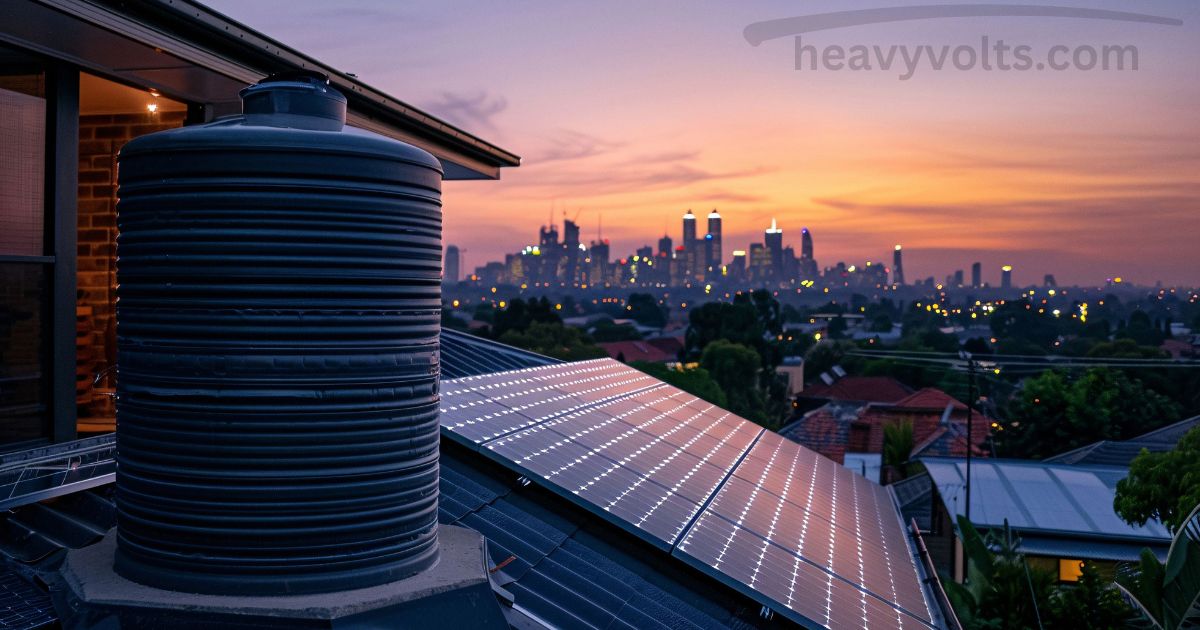
I remember climbing into my parents’ loft years ago just to look at their old solar hot water cylinder, and that curiosity has stayed with me ever since. Solar thermal, also known as solar water heating, captures the sun’s energy and converts it into usable heat for your home’s hot water supply.
A solar collector installed on the roof absorbs sunlight through a special glycolbased heat transfer fluid that continues working even when temperatures drop. Unlike many people assume, these systems do not require constant direct sunshine because they can still collect energy from daylight on cloudy days.
During the longer, brighter summer months, a well designed thermal system can provide up to 90% of a household’s hot water needs, helping reduce both energy bills and carbon emissions. The heated fluid transfers its energy through a heat exchanger into a hot water cylinder before circulating back to the collector for reheating. Solar thermal systems work alongside existing boilers or heat pumps, making them an efficient addition rather than a full replacement. Even for older or heritage properties, careful installation can preserve a home’s character while improving energy efficiency, a practical and sustainable investment for long-term home heating.
How Solar Thermal Works With Your Heating System
A modern home heating system paired with gives households a genuinely sustainable solution for cutting energy demands without a full overhaul. If you already run an existing boiler, whether that’s a regular boiler or one of the newer combi boilers, a solar-compatible hot water cylinder with two heating coils lets the boiler central heating system and a Greenskies thermal system work side by side.
Some installations even pair with air source heat pumps and ground source heat pumps, though it’s always worth checking with a local installer, since every roof and every conventional boiler setup differs slightly.
What I like most is the versatility of these heating setups. Whatever hot water shortfall remains after a stretch of cloudy days, a backup heating source picks up the rest so you never lose comfort. Unlike photovoltaic solar panels that turn sunlight into electricity, solar cylinders heat water directly, acting as a primary heat source for domestic hot water and, in some homes, lending a hand with space heating or pool heating.
This alternative to conventional heating sources reduces reliance on natural gas, which lowers greenhouse gas emissions and slows global warming at the same time, while also trimming your carbon footprint further whenever it’s paired with a standalone heat pump rather than a boiler alone.
Beyond the environmental side, there’s real cost-effectiveness here, since a renewable energy source shields your energy bills from fluctuating energy prices and the ups and downs of fossil fuel markets. That gives households genuine energy independence and a more predictable energy source and stable energy source to count on, year after year.
With technology advancements making these systems steadily better, the reliable hot water supply they provide, backed by a conventional boiler as supplement, keeps uninterrupted heating running through every season, and I’d call it a smart investment for any homeowner serious about efficiency and a cleaner planet.
Financial Costs
Let’s talk cost, because that’s usually the first question anyone asks. A typical solar thermal system runs somewhere between £3,000 and £5,000, according to the Energy Saving Trust, while a solar PV system tends to cost around £6,500, making solar thermal roughly 30% cheaper upfront.
The real comparison, though, comes down to what each system replaces: solar thermal usually handles gas replacement, while solar PV covers electricity demand instead. Based on the current energy price cap in northwest England, gas sits at about 7.34p per kWh compared with 28p per kWh for electricity, meaning electricity costs nearly 2.8 times more than gas. That gap shapes your long-term cost savings, even though solar PV carries a higher capital cost to start with.
Practicalities
On the practical side, solar thermal runs at about 70-80% effective for solar energy conversion, while solar PV only manages 15-22% efficient conversion, so solar PV needs a much larger area to match it, think 4m2 of thermal against roughly 15m2 of solar PV. That smaller footprint also means less weight of panels on your roof, which matters if you’re mindful of heritage values or your roof’s load limit.
That said, installation work for solar thermal takes a bit more effort because it ties into your plumbing and needs a hot water tank, so if you run tankless hot water systems like a combi boiler, expect extra work from your installer. Most systems are sized to cover 70% of your hot water demand, with your boiler filling the gap, and since this heat can’t be sent elsewhere, a bigger tank helps with tank storage for later use. I once heard Professor Stephen Peake joke that if you generate too much hot water, you could fill the bath and wrap it in bubble wrap to keep it warm until evening.
Solar PV behaves differently, since exported energy heads straight to the grid through grid export, currently paid at 4.1p per kWh, unless you store it with batteries or plug in an electric car during daytime electricity use.
Environmental Considerations
Looking at the bigger picture, solar thermal usually replaces gas, or sometimes oil in rural spots, while solar PV panels replace electricity instead. Government carbon per kWh figures put gas at 0.18, oil at 0.25, and electricity at 0.23, which shows why the fuel each system displaces really shapes its emissions reductions.
Because the national grid keeps moving through decarbonisation, and the electricity grid is expected to reach around 0.09kgCO2e/kWh by 2030, some of solar PV’s advantage will grow over time. Even so, decarbonising heating in residential buildings remains tougher than cutting carbon intensity from electricity alone, since heat can’t travel far without transmission losses.
Across several case studies, average embodied emissions for solar thermal came to 2.86 tonnes of carbon over fifty years, compared with 4.98 tonnes for solar PV, meaning thermal needs fewer rare elements and hazardous substances since it’s less chemically complex to build. When you calculate operational carbon and whole life carbon, factoring in grid decarbonisation, solar thermal’s lifecycle carbon savings came out at 22.4 tonnes, while solar PV only reached 5.1 tonnes, a clear win for carbon savings even before you count how fast renewables are spreading across the network.
Solar Thermal and the UK Climate
There’s a common solar technology misconception that the United Kingdom climate is too grey for solar collectors to work, but that’s simply not true. These panels don’t need bright sunlight to function, since solar radiation still reaches them through cloudy days, and a boiler backup or immersion heater backup simply steps in to give a winter hot water boost when needed.
During summer periods, a well-sized solar water heat system can cover close to 100% domestic hot water needs, letting your regular heating system rest completely. Across the full year, annual coverage usually lands between 50% and 60%, depending on your local climate type, the system size you’ve installed, and your household’s water usage rate. All of this feeds directly into the cost effectiveness of the system, since steady hot water use tends to pay off faster.
Applications for Solar Thermal Systems
Most people picture solar thermal in a residential setting, aiming for energy bill reduction, but it works just as well in a commercial setting with high energy demands and expensive heating systems to run. The integration process into an existing hot water system is fairly straightforward, and once installed, the efficiency improvement it brings can last for a genuine twenty years lifespan.
Conclusion
When you weigh it all up, solar thermal holds its own as one of the more sensible sustainable solutions for tackling climate change at home. It takes less roof space than comparable electricity-based setups, carries a lower capital cost, and needs fewer rare mineral demands and less embodied carbon to manufacture, keeping its overall environmental impact small.
Because it typically replaces gas rather than electricity, it can help decarbonise heat in a way that’s harder to achieve elsewhere, and across its full lifecycle it tends to deliver stronger carbon savings than most people expect.
For me, that mix of energy independence, a steady hot water supply, and a genuinely eco-friendly heating option makes solar thermal worth choosing for any home heating system with an eye on a greener future.
FAQ’S
What are the advantages and disadvantages of solar hot water heating?
Every system has its pros and cons, and solar hot water heating is no different. The advantages include lower bills and a smaller footprint, while the disadvantages, or drawbacks, mostly come down to upfront cost and roof suitability. Weighing the benefits against the cons usually tips the scale in favour of thermal for most homes.
Do Worcester Bosch solar panels generate electricity?
A common question is whether Worcester Bosch solar panels handle electricity generation, and the answer is no. Solar thermal panels don’t generate electricity at all; they’re built purely to heat water, not to produce electricity the way solar PV does.
What are the servicing requirements of solar hot water heating panels?
Servicing requirements for solar hot water heating panels are fairly light. Most systems just need annual servicing to check the fluid and pump, with maintenance and general upkeep kept to a minimum.
What are the annual running costs of solar hot water heating panels?
The annual running costs of solar hot water heating panels stay low once installed, since operating costs mostly cover the odd pump check. Compared with gas or electric heating, yearly costs and running expenses stay minimal.
Will I need planning permission?
In most cases, you won’t need planning permission, but it’s still smart to confirm building regulations and get local authority approval if your home is listed or sits in a conservation area.
Can our solar panels increase your property value?
Yes, solar panels can lift your EPC rating, which often leads to a genuine home value increase. A stronger property value is one of the quieter perks of going solar.