
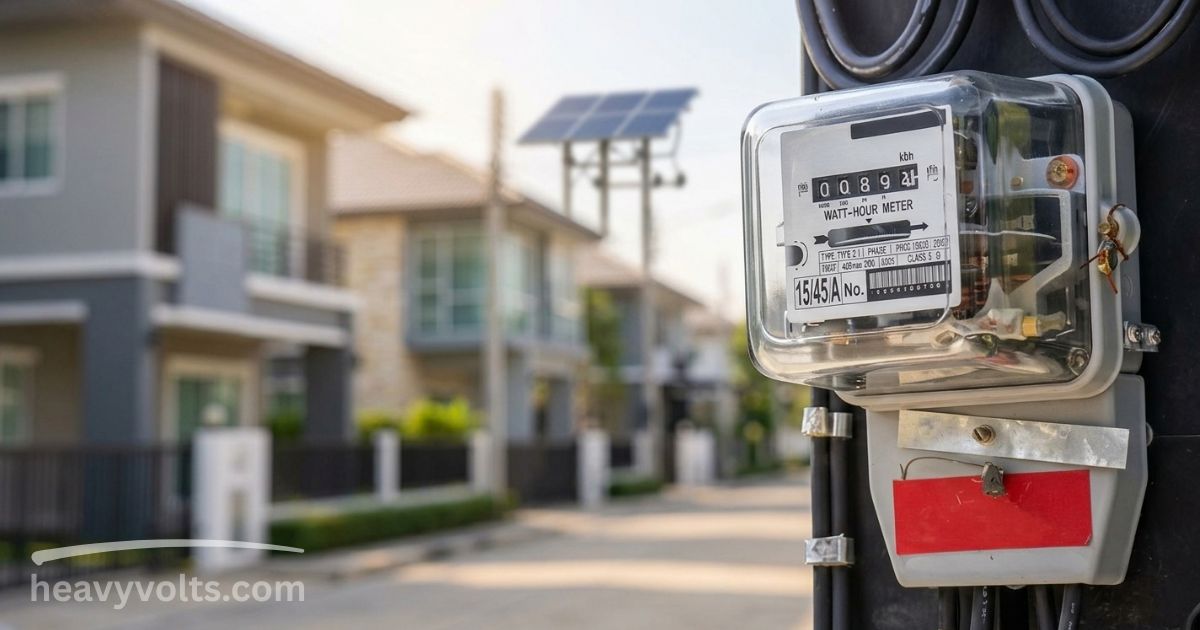
Electricity powers nearly every part of our daily lives, yet most of us rarely think about the small device responsible for measuring exactly how much of it we use. That device is the electric meter, quietly working away in the background, day and night, keeping track of every unit of power that flows into our homes.
Understanding how it works, where it’s located, and how to read it can help you stay on top of your energy usage and avoid any surprises when your bill arrives.
What Is an Electric Meter?
An electric meter is a measuring instrument that records the amount of electrical energy consumed by a home, business, or other electrically powered space. It sits between the main power supply line and the internal wiring of a building, silently counting the flow of electricity as it passes through.
The unit of measurement is typically the kilowatt-hour (kWh), which represents the amount of energy used when a one-kilowatt appliance runs for one hour.
Utility companies rely on these readings to calculate how much a customer owes each billing cycle. Without an electric meter, there would be no fair or accurate way to determine individual usage, since every household and business consumes energy differently depending on their appliances, habits, and the size of their space.
Electric Meter Box: Where It Is Found and Why It Matters
The electric meter box is the protective housing that holds the meter itself, shielding it from weather, dust, and accidental damage. It’s usually mounted on an exterior wall of a home or building, though in some cases it may be found in a basement, utility closet, or a shared meter room in apartment complexes. The box is typically made of durable metal or weather-resistant plastic and often has a transparent cover so the numbers or digital display remain visible without needing to open it.
Keeping the area around your meter box clear and accessible is a small but important responsibility for homeowners. Utility workers need to reach it periodically for readings, maintenance, or inspections, and unobstructed access makes their job easier and quicker. It’s also wise not to tamper with the box yourself, as doing so can lead to safety hazards or billing complications.
How to Read an Electric Meter
Learning how to read your electric meter might sound technical at first, but it’s actually a fairly simple process once you understand the basics. The method depends on whether you have an analog meter or a digital one.
For analog meters, you’ll notice a series of small dials, each with numbers arranged around a clock-like face. To take a reading, you simply record the number that each dial’s pointer is closest to, working from left to right. One quirk to remember is that the dials alternate in direction, some spin clockwise while others move counterclockwise, so it helps to pay close attention to each one individually.
Digital meters, on the other hand, are much more straightforward. They display a row of numbers directly on a small screen, similar to a car’s odometer. You simply note down the digits shown, and that number reflects your cumulative energy usage. Many digital and smart meters even transmit this data automatically to the utility company, removing the need for manual readings altogether.
Taking regular readings, whether monthly or even weekly, can give you a clearer picture of your household’s energy habits and help you spot unusual spikes that might indicate an appliance issue or energy leak.
The Two Main Types of Electric Meters
Electric meters generally fall into two broad categories: analog meters and digital (or smart) meters.
Analog meters: Analog meters are the traditional style, featuring mechanical dials that physically rotate as electricity flows through them. They’ve been in use for decades and are valued for their simplicity and durability, though they require a technician to visit in person to record usage.
Digital meters: Digital meters, often referred to as smart meters, represent the modern evolution of this technology. They use electronic components to measure and display energy consumption, often with added features like real-time usage tracking, remote reading capabilities, and the ability to communicate directly with the utility provider. Many regions have been steadily transitioning to smart meters because they reduce the need for manual readings and provide more detailed insights into energy consumption patterns.
Frequently Asked Questions
What is the electric meter?
An electric meter is a device that measures how much electrical energy a home or building consumes over time. It provides the data utility companies use to calculate billing, and it acts as the go-between connecting the main power line to a property’s internal electrical system.
Can I buy my own electric meter?
In most cases, no. Electric meters are typically owned, installed, and maintained by the local utility company, even if the meter itself is physically attached to your property. This is because the utility needs to ensure the meter meets calibration standards and integrates properly with their billing systems. If you’re considering an upgrade, such as moving from an analog to a smart meter, it’s best to contact your utility provider directly rather than purchasing one independently.
What is the Main Types of Electric Meters in home?
The two primary types are analog meters, which use mechanical dials, and digital or smart meters, which display readings electronically and often offer additional features like remote data transmission. Each type serves the same core purpose but differs in technology, convenience, and the level of detail they provide.
Which Type of Electric Meter Is Best for a Home?
For most modern households, a smart meter tends to be the better choice. It offers greater accuracy, eliminates the guesswork of manual dial reading, and often gives homeowners access to real-time usage data through an app or online portal. That said, the “best” option can depend on what’s available through your local utility provider, as not all areas have fully transitioned to smart meter infrastructure yet.