
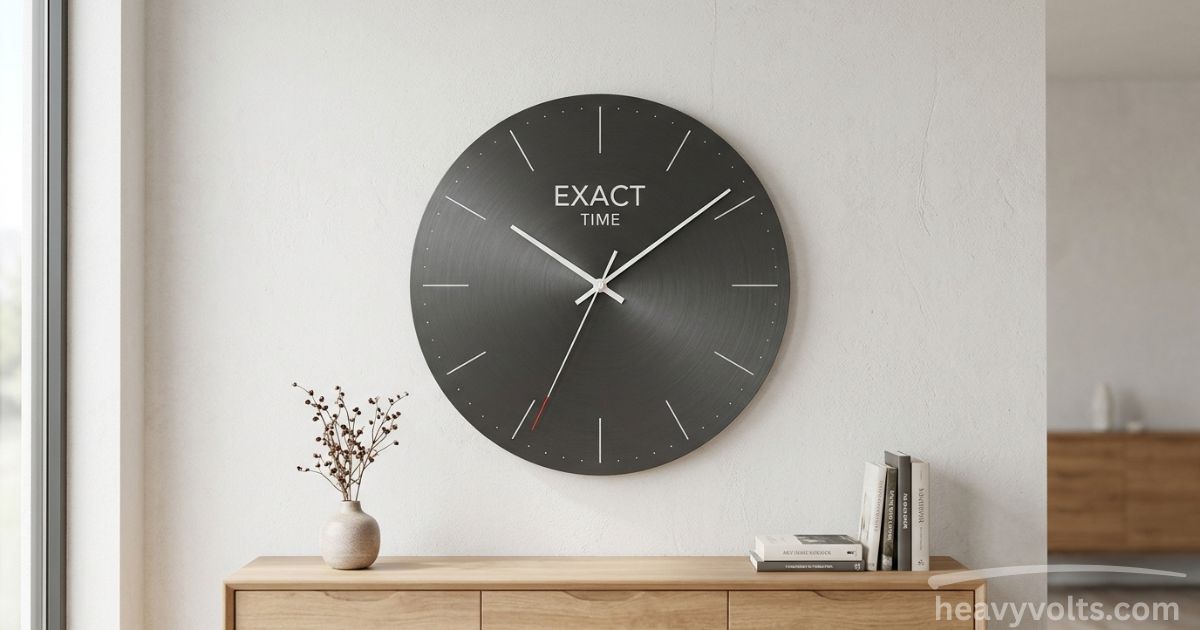
Time moves quietly in the background of our lives, yet we check it dozens of times a day. We glance at a phone before leaving home, look at a wall clock while waiting for a meeting, and set alarms so we never miss something important. Most of the time, knowing roughly what time it is feels good enough. But there are moments when “close enough” is not enough, and that is when people begin searching for the exact time.
What Does “Exact Time” Really Mean?
When people ask for the exact time, they usually mean the current hour, minute, and second, matched as closely as possible to a trusted reference. It is different from the rough time we read off an old wall clock that may be a few minutes fast or slow. The exact time is based on highly accurate timekeeping systems, such as atomic clocks, which measure time by the natural vibrations of atoms.
Because these clocks are so precise, they lose or gain only a tiny fraction of a second over millions of years. Your phone, computer, and many websites sync with these sources through the internet, which is why the time they show is usually very reliable.
Exact Time with Seconds: Why the Little Numbers Matter
Many people look for the exact time with seconds because they need to be precise about something that happens in a moment. A student may be waiting for an online exam to begin, a shopper may be hoping to catch a limited-time sale, and a runner may want to start a stopwatch together with a clock.
Even a one-second difference can decide whether you submit a form before a deadline or just miss it. Seeing the seconds tick forward also gives a calm sense of certainty, as if the day is under your control.
When Is Knowing the Exact Time Important?
There are many everyday situations where the exact time is quietly important. Travelers rely on it to catch trains and flights without stress. Online sellers and buyers depend on it for auctions, product launches, and ticket sales that open at a specific second. Teachers and students use it for timed tests and assignments, while professionals use it to start meetings, calls, and live broadcasts together.
Scientists, engineers, and banks go even further, because their systems need to stay perfectly synchronized to work safely. For most of us, though, the reason is simple and human: we want to feel on time and at ease.
Why Your Clock Might Be Slightly Off
Even good clocks drift over time. A wristwatch may slowly run fast or slow, and a wall clock’s battery may weaken. Even digital devices can show a small difference if their time settings are switched to manual or their internet connection has been off for a long while.
If you have ever arrived somewhere and discovered your clock was a few minutes off, you know how easily it can happen, and it is nothing to worry about.
Simple Ways to Find the Exact Time
The easiest way to find the exact time is to use a trusted online time display that shows hours, minutes, and seconds for your location. Most smartphones and computers also have an automatic time setting that keeps them synced with network time servers, so turning that on is a gentle way to stay accurate.
If you use a wristwatch or wall clock, you can compare it now and then with an online clock and adjust it. Doing this once in a while takes only a minute, and it can save you from small daily inconveniences.
Living Peacefully with Time
While being precise has its place, it helps to remember that time is not only about numbers. Knowing the exact time can make us more organized and punctual, but it should also leave room to breathe. Use accurate time as a helpful tool, not a source of pressure. When you know what time it is, you can plan your day with confidence and then enjoy the moments in between without constantly watching the clock.
Conclusion
The exact time, down to the second, is a small piece of information that supports a surprisingly large part of modern life. From catching a train to joining an online class, from timing a sale to simply feeling prepared, it gives us clarity and calm. By keeping your devices synced and checking a reliable time source when it matters, you can move through your day knowing you are right on time.
FAQ’S
What is the exact time?
The exact time is the current moment measured as precisely as possible in hours, minutes, and seconds, based on highly accurate reference clocks. Because it changes every second, the best way to see it is to check a reliable online clock or a device that syncs automatically with network time.
What time is it exactly?
Exactly what time it is depends on your location and time zone. A synced smartphone, computer, or trusted online time display will show you the precise hour, minute, and second for where you are right now.
What is the exact time right now?
The exact time right now is whatever your accurate, synced clock is showing at this very moment. Since time moves forward constantly, any written time quickly becomes outdated, so a live clock is always the most dependable choice.
What is the exact time with seconds?
The exact time with seconds includes the hour, the minute, and the second, for example 10:45:32. Live digital clocks and many online time tools display seconds and update them continuously, which is helpful for deadlines, timed events, and anything that needs precision.
What is the exact time and seconds?
This simply means the full current time, including the seconds counter, for your time zone. To see it, open a live clock on your phone, computer, or a reliable time website, and make sure your device’s automatic time setting is turned on so it stays accurate.