
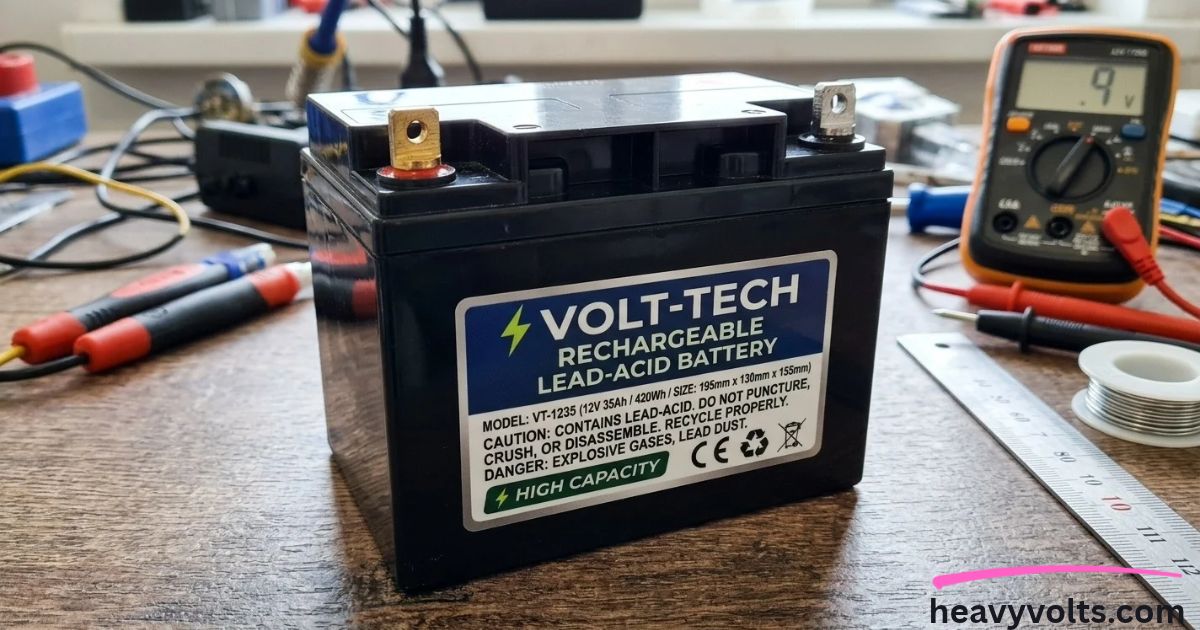
A battery replacement service in Denver swaps a worn power source for a new one and checks the system around it. Most drivers need car battery replacement, while others need help with a lithium battery in bikes, tools, or drones. This guide explains what to look for.
We read four brand websites, and each covers a different corner of the lithium battery market. One is a local car repair shop in the capital of Colorado, one builds packs, and one runs a recycling program. Compare them all below.
What does a battery replacement service in Denver include?
A visit starts with a battery evaluation, moves to battery testing with diagnostic tests, and ends with professional installation. The technician handles old battery removal and sends the used unit to battery recycling. Good shops explain each step first.
Many shops add preventive maintenance, terminal cleaning, and corrosion prevention. A battery inspection often catches trouble early. Ask for correct battery selection by make and model fitment, because a wrong size loosens the clamps.
Which battery types should you ask about?
Ask about lead-acid battery, AGM battery, and lithium-ion battery options, because each suits a different vehicle. A conventional battery fits many older cars, an AGM unit handles heavy electrical loads, and lithium packs weigh far less. Your owner’s manual names the type your car expects.
A starter battery delivers a short burst of current to crank the engine. A rechargeable battery in a hybrid vehicle or electric vehicle (EV) faces different demands, and a battery management system (BMS) watches its battery cells. A high-capacity battery needs a matching charger.
How do you know your battery needs replacing?
Watch for a weak battery that shows up as a slow engine crank and dim headlights at idle. A dead battery after one cold night gives a clearer warning. Do not wait for a stranded vehicle to force the decision.
Age matters too, since a car battery typically lasts three to five years. Corrosion on the posts, a swollen battery case, or overheating during charging all signal diminished performance and danger. Replace any bulging unit immediately.
What signs show a lithium battery is wearing out?
Look for long charging times, a pack not fully charging, and losing charge quickly between rides. The Hungry for Batteries FAQ links these signs to packs older than two years nearing end of life. Slower charging alone proves nothing.
Frequent recharging points to battery degradation, and a shortened runtime on a familiar route confirms it. The same FAQ says a well-kept e-bike pack can last five to seven years. Handle any damaged or defective battery with special care.
What tests should a technician run first?
A multimeter gives the first number, since a fully charged 12-volt battery rests near 12.6 volts. A battery load tester checks whether voltage holds under demand, and a voltage test after starting shows the charging side. Any shop can run these in minutes.
A charging system test and an alternator test show whether the alternator keeps charging. Technicians also inspect the starter motor, battery terminals, and electrical connections for a voltage drop or parasitic battery drain. Computer diagnostics read stored faults across the vehicle electrical system.
What do the numbers on a battery label mean?
Three numbers matter most: cold cranking amps (CCA), reserve capacity, and battery group size. The first measures the current a 12-volt battery delivers for 30 seconds at 0°F.
Reserve capacity counts the minutes a battery supplies 25 amps at 80°F before falling to 10.5 volts. A state of charge reading shows how full the battery is, while a jump start only starts the engine. Ask to see the battery health assessment.
How does Denver’s climate affect battery life?
Denver sits 5,280 feet above sea level, and cold snaps and wide temperature swings strain a winter car battery. Cold slows the chemical reaction inside the cell and thickens engine oil, which cuts engine starting power. Test the battery before the first hard freeze.
Cold-weather battery performance drops as temperatures fall, so a battery that starts easily at 70°F may struggle at 0°F. Mountain trips add high-altitude driving and heavy heater use. Ask any Denver auto repair shop how it tests for this.
Why do drones, scooters, and RC models use lithium?
Light machines need plenty of energy from a small pack, and a lithium polymer (LiPo) battery delivers it. An FPV drone, a UAV, and a quadcopter all fly longer when the pack weighs less. That weight advantage explains why a drone battery usually uses lithium chemistry.
The same logic applies to an RC car, RC helicopter, RC boat, and racing hobby build using an RC battery. Robotics projects and an electric scooter also need steady output. A LiFePO4 battery appears in scooter and bike packs on the Semitech product page.
How do you read a lithium pack listing?
Start with voltage, capacity (mAh / Ah), and discharge rate (C rating). Voltage sets the power level, capacity sets the runtime, and the C rating sets how fast it delivers current. A listing reading 22.2V, 6500mAh, and 60C shows all three.
The cell configuration (4S, 6S) counts cells in series, so a 6S pack at 3.7 volts per cell reaches 22.2 volts. Match the EC5 connector, XT60 connector, or XT90 connector to your device. An 18650 cell, 21700 cell, or 26650 cell names its size in millimeters.
Which brands should you check?
This guide covers Sebastian’s Garage, Deka Services, Hungry for Batteries, Semitech, and United Lithium. Each brand offers the services its own website lists, so confirm details there before you visit or order. We describe only what each site states.
The five brands serve different readers, from drivers to hobbyists. None replaces the others. Read the five profiles below.
What does Sebastian’s Garage offer for a car battery?
Sebastian’s Garage is a licensed repair shop in Denver, and its battery page lists battery replacement, battery testing, professional installation, and battery recycling. Its skilled technicians also handle preventive maintenance, including terminal cleaning and corrosion prevention. The page names lead-acid battery, AGM battery, and lithium-ion battery options.
The same site lists computer diagnostics, a regular car check-up, and a pre-purchase inspection. Those help when you suspect the wiring rather than the battery. Check the shop’s own page for booking.
What does Deka Services offer?
Deka Services describes its work as engineer, furnish, and install. Its homepage says skilled technicians deliver regular maintenance programs and resolve unplanned emergencies. The site also lists a Deka Shield Program that adds warranty protection for Deka batteries.
The homepage describes a scheduled maintenance program and emergency repair support for facilities. Ask whether Shield coverage counts as extended warranty protection for your battery. Teams that run facility backup power should read the product pages, because the homepage gives no chemistry details.
What does Hungry for Batteries offer?
Hungry for Batteries is a recycling campaign for electric bike packs that The Battery Network runs and PeopleForBikes endorses. A rider finds a drop-off location, hands over the e-bike battery, and the retailer packs it for a recycler. The site covers recycling only, so it lists no repair or replacement.
Participating retailers act as a collection site and receive USDOT-compliant recycling kits with prepaid recycling shipping. The recycling program accepts only supporting brands, so check the brand list first. Retailer safety training covers damaged-defective battery handling.
What should e-bike owners know about classes and charging?
An electric bicycle falls into e-bike classes (Class 1, 2, 3), and the class describes the motor. Class 1 assists only while you pedal up to 20 mph, Class 2 can drive alone to 20 mph, and Class 3 assists to 28 mph. Motors stay under 750 watts.
Avoid unattended charging and never leave a pack plugged in overnight. Follow your owner’s manual instructions, and choose protected battery storage away from rain. These habits cut the fire risk and slow battery degradation.
What does Semitech offer?
Semitech is a battery pack manufacturer in Dongguan, China, and its product page groups listings into drone battery, RC battery, and custom battery pack categories. It lists OEM battery and ODM customization work for a customized battery pack. The page describes no repair or replacement visits.
Listings let buyers specify size, capacity, current, and power, which amounts to battery capacity customization. Other entries describe a soft-case battery for hobby use and a pack for an electric scooter. Ask Semitech about lead times and minimum orders.
What does United Lithium offer?
United Lithium sat on our research list, but its page did not load, so we cannot confirm any service. We list none and ask you to read its website. Check whether it offers a battery rebuild service or battery repair for your device.
Before you send a pack anywhere, ask what the provider replaces and tests. Ask which battery warranty covers the work.
Should you repair a pack or replace it?
Battery repair makes sense when only the battery cells or circuit board failed and the case and charging port still work. A rebuild swaps cells inside the original case, and cell replacement does the same for smaller packs. Replace the pack if the case cracks or overheating appears.
A replacement battery pack from the original maker keeps the specs your device expects. An aftermarket battery may differ in capacity or protection circuitry. Compare label ratings before you buy.
How do you handle a damaged lithium battery safely?
Stop using the pack, keep it away from flammable items, and follow safe battery handling rules. A punctured or swollen cell can trigger thermal runaway, a self-heating chain reaction. Treat any damaged or defective battery as a fire risk until a professional takes it.
Never put a lithium pack in household trash, because it counts as hazardous waste. Responsible disposal follows environmental regulations, and eco-friendly disposal keeps cells out of landfills. Good end-of-life battery management supports landfill diversion and sustainability.
What should you look for in a provider?
Look for a licensed repair shop with skilled technicians, clear battery testing results, and a written battery warranty. Confirm it matches the battery to your vehicle and handles battery recycling for the old unit. A local car repair shop also saves you a tow.
Ask whether the quote includes old battery removal, terminal cleaning, and a charging system test. Confirm the shop services your chemistry, whether lead-acid battery, AGM battery, or lithium-ion battery. Read the provider’s website before you call.
Why use this website to find a provider?
This website puts the research in one place, so you skip a dozen tabs comparing shops, manufacturers, and recyclers. Each profile states only what the provider’s own site confirms. Match your need, such as Denver battery replacement, to the right brand.
We read each brand’s page, record the confirmed services, and flag anything we could not verify. That separates a Denver auto repair option from a pack manufacturer. It also shows when a brand only recycles.
What do people ask about battery replacement in Denver?
How long does a car battery last?
Test the battery lifespan yearly after year three. Replace sooner if you notice a slow engine crank.
Can a lithium battery go in household trash?
No, a lithium battery never belongs in household trash. E-bike packs from participating brands go to a drop-off location that Hungry for Batteries lists. Other types need a local recycler, so call first.
Where can you find a battery replacement service in Denver?
Start with the profiles on this website, which compare Sebastian’s Garage, Deka Services, and three other brands using only what their own sites confirm. Match the provider to your battery type, ask the questions above, and check each brand’s website for current services. Visit our website to find the right Denver battery replacement option for your car battery or lithium battery.