
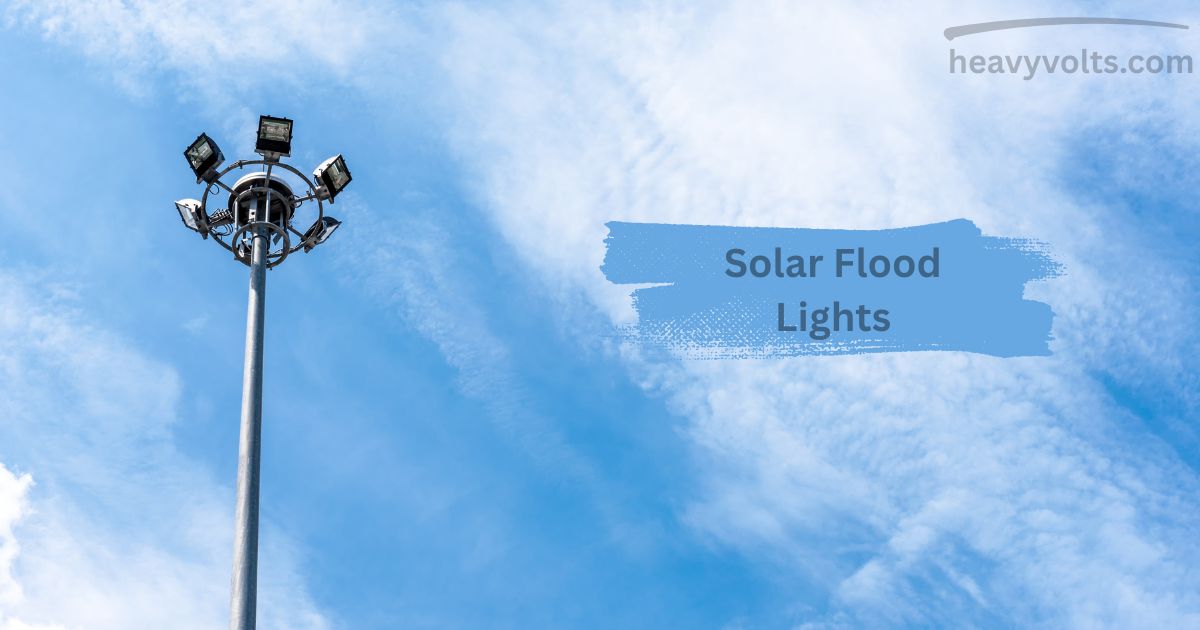
There is something quietly comforting about a well-lit yard at night. A softly illuminated driveway, a glowing garden path, or a bright porch can make a home feel safer and more welcoming. For many families, solar flood lights have become a thoughtful way to achieve that feeling without adding to the electricity bill. Powered entirely by the sun, these lights ask very little of you once they are in place, and they offer steady, dependable brightness when darkness falls.
What Are Solar Flood Lights?
Solar flood lights are outdoor lighting fixtures designed to cast a wide, bright beam over a large area. Unlike traditional flood lights that rely on wiring and grid electricity, solar flood lights use a small solar panel to collect sunlight during the day. That energy is stored in a rechargeable battery, and as soon as the sun sets, a built-in sensor switches the light on automatically. In simple terms, they gather light by day and give it back by night.
Because there are no cables to run and no electrician to hire, they are especially helpful in places where wiring is difficult or costly, such as distant corners of a garden, farm gates, boundary walls, or open courtyards.
Understanding Solar Flood Light Bulbs
Most modern solar flood lights use LED technology, and the term “solar flood light bulbs” usually refers to these energy-efficient LED units built into the fixture. LEDs are well suited to solar power because they produce strong, clear light while using very little energy. This means the battery lasts longer through the night, and the light stays bright without draining the system too quickly.
When choosing a fixture, it helps to look at the lumen rating, which tells you how bright the light will be. For small pathways, a lower lumen count is often enough, while larger yards, parking areas, and building exteriors benefit from higher-lumen models. Warm white tones create a cozy atmosphere, while cool white offers sharper visibility and a stronger sense of security.
Why Solar Powered Flood Lights Make Sense
One of the greatest comforts of solar powered flood lights is how simple they are to live with. They do not add to your monthly electricity costs, and they continue working during power outages, which can be a real relief when the neighborhood goes dark. They are also kind to the environment, since they run on clean, renewable energy and reduce your household’s carbon footprint.
Installation is another gentle advantage. Most models can be mounted on a wall, fence, or pole with just a few screws, and many come with a remote control or adjustable brackets so you can direct the light exactly where it is needed. Maintenance is minimal, usually limited to wiping dust from the panel now and then so it can absorb sunlight efficiently.
Choosing Solar Flood Lights for Outdoor Use
When you shop for solar flood lights outdoor spaces can truly benefit from, a few details deserve your attention. Start with the battery capacity, since a larger battery generally means longer lighting time after sunset. Next, consider the size and quality of the solar panel, because a stronger panel charges faster, even on cloudy days.
Weather resistance matters just as much Look for an IP65 rating or higher, which means the light can handle rain, dust, and humidity without trouble. Motion sensors are another helpful feature, allowing the light to stay dim until someone approaches and then brighten instantly, saving energy and alerting you to movement near your home.
Placement also plays an important role. Choose a spot that receives direct sunlight for several hours each day, away from shade cast by trees, roofs, or walls. A little thought at this stage can make a noticeable difference in how well the light performs every evening.
Where Solar Lights and Flood Lights Work Best
Solar lights flood light combinations can be used in many everyday settings. They can brighten a front entrance, light up a backyard gathering, protect a garage or shed, or guide visitors along a long driveway. Farms, shops, schools, and community spaces also use them to improve safety without complicated electrical work. Wherever a bit of extra brightness is needed, a solar flood light can quietly do the job.
A Bright and Peaceful Choice
Solar flood lights offer a calm, practical way to light your outdoor spaces while caring for both your budget and the planet. With a little attention to brightness, battery strength, and placement, you can enjoy safer evenings and a warmer, more inviting home. Once the sun has done its work, all that is left to do is enjoy the glow.
FAQ’S
Are solar flood lights any good?
Yes, quality solar flood lights can be very good, especially modern models with efficient LEDs and strong batteries. Their performance depends on the build quality, panel size, and how much sunlight they receive. A well-made light from a reliable brand can provide dependable illumination for years.
Are solar flood lights worth it?
You save on electricity and wiring costs, enjoy easy installation, and gain a light that keeps working during outages. The initial price may be a little higher than basic fixtures, but the long-term savings and convenience often make up for it.
Are solar powered flood lights any good?
They are a good choice when you pick the right size and quality for your needs. Cheaper, low-quality units may dim quickly, but well-reviewed models offer bright, steady light and good weather protection. Reading reviews and checking lumens, battery capacity, and water resistance will help you choose wisely.
Do solar flood lights work?
Yes, they do. They charge during the day, even on partly cloudy days, and turn on automatically at dusk. On very overcast or rainy days they may charge more slowly and shine for a shorter time, but they still function. Placing the panel in a sunny spot gives the best results.
How long do solar flood lights last?
The LED lights themselves can last around 25,000 to 50,000 hours, which is many years of regular use. The rechargeable battery usually lasts between two and five years, depending on quality and conditions, and can often be replaced. With simple care, the whole system can serve you well for a long time.