
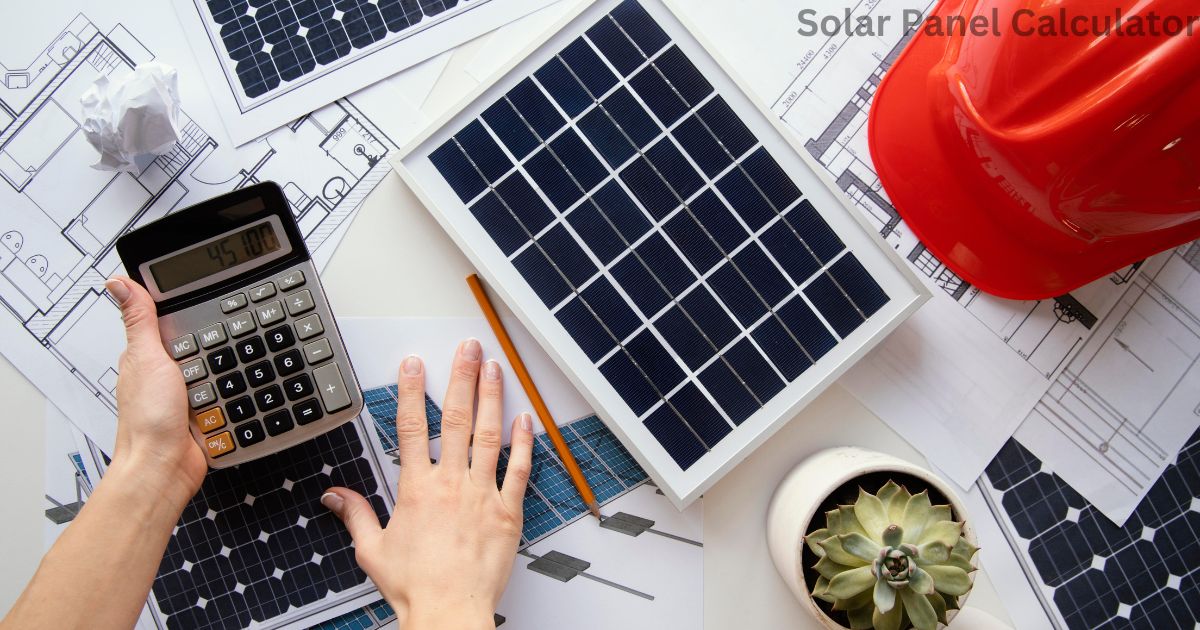
I remember standing on my own roof with a tape measure, trying to guess my electricity needs without any real plan that’s the kind of guesswork a good solar panel calculator removes. It looks at your property, your roof, your location, and your energy usage, then turns all of that into one clear system size instead of a rough figure from a salesperson.
Your daily usage patterns matter just as much as your roof space, and once you know your details, the tool closes the gap between what you think you need and what your panels can actually deliver.
Whether you’re planning a small home setup or a full commercial installation, this shift matters more every year. Solar technology keeps improving, electricity prices keep climbing, and homeowners everywhere want to know the real cost, the real savings, and the real expected output before they commit financially. Once you have your roof details sorted, you can stop guessing and start planning toward genuine renewable energy.
What Is a Solar Panel Calculator?
A solar panel calculator works as an online tool, or sometimes a software tool, that studies your property and turns raw numbers into a usable system. It asks for your average monthly electricity use, your location, and your roof dimensions, then estimates how many solar panels your household needs to cover daily electricity demand. Some calculators also factor in your local electricity rate and any planned increase in future usage, such as adding an EV or heat pump, so the system size recommendation isn’t just based on your current habits.
I always tell people it’s not a replacement for a professional site survey, but it gives you real quotes to compare before you even call an installer. Beyond just system size, many tools also show installation costs, annual generation, and carbon savings, so you get a fuller picture before deciding. Some of the more detailed calculators go a step further and break down the equipment involved, listing panel wattage, inverter type, and expected warranty periods, which helps you compare quotes from different installers on a more even footing.
On top of that, seeing the long-term financial payback side by side with panel efficiency numbers is what makes this whole decision feel less like a gamble and more like a plan you can trust, covering both the environmental upside and the financial upside at once. A number of calculators also include a simple ROI or break-even timeline, showing roughly how many years it will take before the system pays for itself through electricity savings.
How a Solar Panel Calculator Works
A solar panel calculator makes it easy to estimate how much electricity your system can generate based on your property’s unique conditions. You begin by entering your location using coordinates from Google Maps, as sunlight levels vary by region. Next, you add details for each roof section, including its orientation, roof pitch, and any shading caused by trees, chimneys, or nearby buildings.
The calculator then calculates the total system size by combining the wattage of all installed panels and supports multiple roof arrays in one estimate. It uses trusted data sources such as the European Commission’s PVGIS database to analyse sunlight, seasonal weather, and system performance. Some calculators also cross-reference historical weather patterns over several years rather than a single year’s data, which gives a more reliable long-term generation estimate instead of one skewed by an unusually sunny or cloudy year.
Results are displayed in monthly and annual generation charts, along with the recommended system size and estimated number of panels required. Many users are surprised that north-facing roofs can still produce useful energy, although south-facing roofs usually deliver the highest output. East and west-facing roofs typically fall in between, and splitting panels across both can sometimes even out generation across the morning and afternoon.
Advanced calculators also compare expected electricity generation with your household energy usage and account for factors like system losses, temperature, battery storage, and local electricity tariffs for more accurate savings estimates. A few also model panel degradation over time, typically around 0.5% efficiency loss per year, so the savings projections reflect realistic output 10 or 20 years down the line rather than just the first-year figure.
Why Homeowners Use a Solar Panel Calculator
Choosing a solar system means facing a pile of technical decisions size, cost, expected savings, payback period and it’s easy to freeze up. A good calculator cuts through that noise by turning your own household data into personalized estimates, instead of leaning on generic assumptions that don’t fit your roof space or your budget.
This is really about financial planning: most homeowners want to know their electricity savings, their annual savings, and their real lifetime financial benefit before making an upfront investment this size. It also helps with budgeting, since you can compare panel types across your own price range and see which one actually pays off.
How the Estimate Gets Calculated
Different tools use slightly different formulas, but the process stays similar underneath. Your monthly kWh usage first divides down into a daily average, which becomes the baseline for system sizing — and your daily energy consumption only tells half the story if you’re planning future additions like an EV, a heat pump, or new appliances.
Then the calculator looks at panel wattage: residential panels typically run 350–500+ watts, and higher wattage, higher efficiency panels mean fewer panels fit into tight roof space while still hitting your target. Finally, it works out the total panels required, after subtracting real efficiency losses from temperature, wiring, and inverter performance — sizing a bit larger now genuinely beats an expensive upgrade later.
Factors That Affect Real World Performance
A calculator hands you a solid estimate, but real weather and a handful of practical factors decide actual system performance once your panels go up. Sunny days boost output, cloudy days cut it, and this surprised me the first time I read it panels actually run more efficient in cooler, sunny conditions than under intense heat, since high temperatures quietly reduce panel efficiency.
Roof angle matters too: an optimal pitch lifts annual generation, while roofs that sit too steep or too flat often lose a little unless installers adjust the mounting. Higher panel efficiency also squeezes more power out of every square foot, which really helps on smaller roofs, and if your system suffers from clipping on bright days, nudging your estimate down by 5–10% through your cost per inverter planning keeps things realistic.
Benefits of Using a Solar Panel Calculator
A solid calculator protects you from two bad outcomes: an undersized system with insufficient generation that keeps you leaning on the grid, or an oversized system that inflates your upfront cost for no real gain. It also lets you compare panel types and efficiencies across different system sizes, matching everything to your actual budget rather than a sales pitch.
Beyond the raw panel count, you get a real read on installation cost, payback period, and lifetime savings, plus a sense of your future carbon emissions reductions. Walking into installer conversations with realistic expectations also means you can spot accurate quotes immediately and avoid unnecessary upselling.
Common Mistakes to Avoid
One mistake I see often: people trust a single month’s bill instead of an annual average, and seasonal swings quietly wreck the whole estimate. Ignoring shading is another trees or nearby structures cut real generation and output, yet many calculators quietly assume perfect shade free conditions unless you tell them otherwise.
Skipping future usage, like an EV, a heat pump, or extra appliances, can force a costly upgrade later, and chasing the lowest price over real efficiency often means weaker warranties and less long term value.
Finally, remember that a calculator is a planning tool, not a guarantee actual performance depends on installation quality, ongoing maintenance, and your own local conditions, so treat any upfront saving claim with a healthy dose of professional assessment before you trust it for your panels.
Residential vs. Commercial Use
Residential calculators usually center on your household’s monthly bill, weighing roof size, usage, and local sunlight against a goal of energy independence, with battery storage increasingly popular for backup power. Commercial calculators carry more complexity: usage shifts by time of day and season, buildings carry heavier equipment loads, and multiple roof sections need separate financial evaluation.
On the money side, businesses often weigh tax incentives, depreciation, and long run return on investment, factoring in demand charges and future business growth projections. Some commercial setups skip standard rooftop installations altogether in favor of ground mounted arrays or solar carports, which changes the whole calculation.
Sizing a Solar Panel Calculator for Off Grid or Battery Based Systems
Grid tied homes are one thing, but off grid systems ask for a much more hands on approach, and it starts with your loads. List every appliance, note its wattage, and count real hours of daily use DC devices like LED lighting pull straight from the battery, while AC devices run through an inverter, and even a small kettle needs converting into a decimal hour figure before you add it to your daily load.
Next comes battery voltage. Going higher, from 12V to 24V or 48V, cuts your wiring costs, lifts overall efficiency, and lowers the current your charge controller has to handle, all while a 1,000W inverter or larger hybrid units stay safely under a 100A threshold helpful if you’re running multiple units in parallel.
Every inverter also carries a standby power draw often 20W for a smaller unit and 50W for a larger one and that adds up in watt hours over a full day, so don’t skip it just because your location already gets plenty of sun.
Then decide your autonomy target: how many days you want the system running on battery alone with zero solar input, often 3 days for full off grid reliability, or just 1 day if you’re grid connected as backup.
Battery capacity depends heavily on battery chemistry lead acid gives you roughly 50% usable battery power at about 80% round trip efficiency, while lithium allows deeper discharge at closer to 99%, meaning a lead acid setup always needs more raw battery capacity for the same energy.
From there, check your sun hours using a tool like PVWatts, focusing on the worst case winter month, since your minimum monthly sun hours and least sunny days usually the shortest days of winter — set your real worst case scenario.
Divide your daily recharge requirement by those peak sun hours to land on the solar wattage, or solar panel wattage, you actually need to recharge each day: a lead acid bank recharging from 50%→100% typically demands more solar array capacity than a lithium bank recharging from 10%→90%. Building in some surplus capacity above your days of autonomy keeps the whole setup reliable, even through the worst case winter month.
Managing Seasonal Generation Gaps
A good calculator will show you something important: your system’s generation isn’t even across the year you’ll likely beat your usage in summer months and fall short in winter. Many homeowners handle this gap with home batteries, charging them from excess summer generation or cheap off peak electricity to smooth out supply.
Some energy providers also offer export tariffs, crediting you for exported summer electricity at rates that offset the cost of importing power during winter shortfalls effectively turning the grid itself into a giant seasonal battery.
Conclusion
At the end of the day, a solar panel calculator takes a pile of messy engineering variables — your real electricity usage, your roof characteristics, your local sunlight availability, and your panel efficiency and turns them into one honest estimate.
It won’t replace a professional site visit, but it hands you a realistic system size, an expected generation figure, a fair cost, and real savings before you ever call the installers. That’s exactly what I’d want before betting money on any solar decision for my own property.
Frequently Asked Questions
What is a solar panel calculator?
This is simply an online tool that looks at your electricity usage, your location, and your roof details to estimate how many solar panels you need, along with your likely system size, installation cost, and potential savings.
How accurate is a solar panel calculator?
It gives a reliable estimate based on the information you provide, though a professional site inspection is still worth getting before finalizing your system design.
Can it estimate my electricity savings?
Yes — most calculators estimate your annual generation, your likely bill savings, and your payback period, all based on local electricity rates.
What information do I need to use one?
You’ll typically need your average monthly electricity consumption, your property location, your roof size and orientation, and sometimes details on shading or battery storage details.
Can businesses use a solar panel calculator?
Absolutely many tools support both residential properties and commercial properties, helping estimate system size, energy production, and long term ROI either way.
Is it worth putting panels on a north facing roof?
Often yes it depends on your location and roof pitch, since north facing arrays usually trail a south facing roof but still add real annual output, especially through the summer months.
What is “clipping” and does it affect my estimate?
Clipping happens when your panels generate more power than your inverter can handle, and basic calculators often miss it, so adjust your estimate down slightly if it applies to you.