
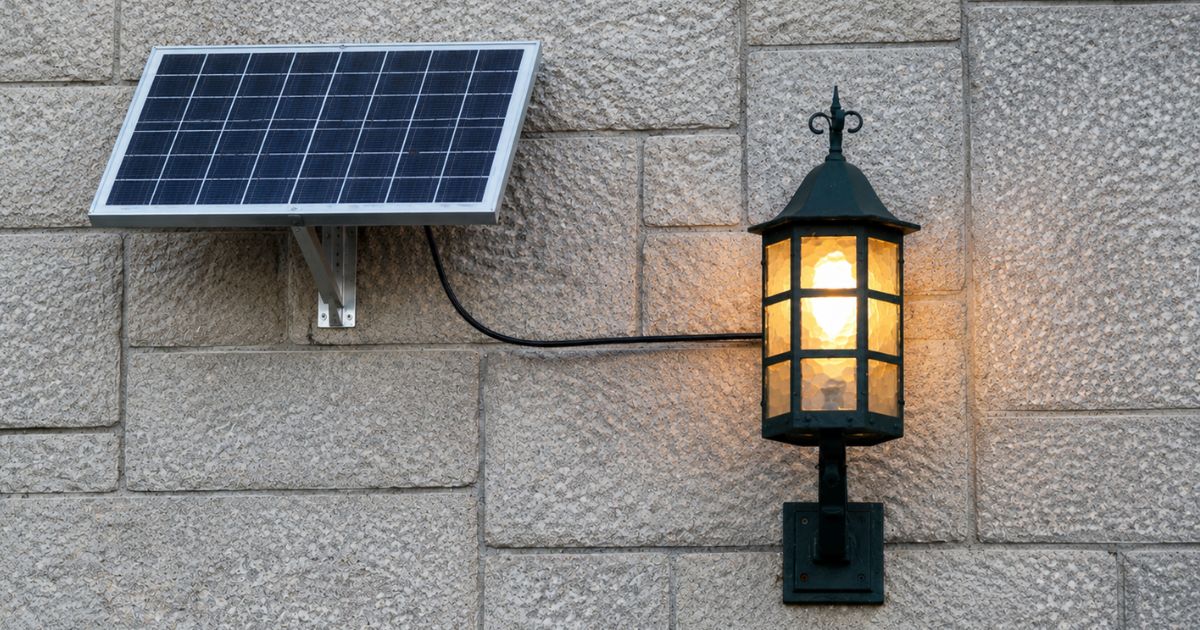
Solar Wall Lights are changing the way homeowners illuminate their outdoor spaces, offering a perfect blend of style, convenience, and energy efficiency. Imagine stepping outside on a peaceful evening to see your garden, pathways, or patio bathed in a warm, welcoming glow without the hassle of wiring or rising electricity costs.
Powered entirely by sunlight, these innovative lights provide a simple yet effective way to enhance both safety and curb appeal. More than just a modern lighting solution, they represent a smarter and more sustainable approach to outdoor living. Whether for homes, rental properties, or commercial spaces, solar wall lights have become a popular choice for creating beautiful, eco-friendly environments.
Understanding Solar Wall Lights
At their core, solar wall lights are self-contained lighting units designed to be fixed onto walls and powered entirely by the energy of the sun. Each unit typically consists of a solar panel, a rechargeable battery, an LED light source, and a sensor that detects changes in light levels. During daylight hours, the solar panel absorbs sunlight and converts it into electrical energy, which is stored in the battery.
Once the sun sets and the sensor registers darkness, the stored energy is released to power the light automatically. The entire process is seamless, silent, and completely independent of the electricity grid, making solar wall lights one of the most self-sufficient lighting solutions available today.
The Growing Appeal of Solar Wall Lights
There is a reason why solar wall lights have found their way onto the walls of homes in every corner of the world. Their appeal stretches far beyond novelty. At a time when energy costs are climbing and environmental awareness is deepening, the idea of a light that simply charges itself each day and asks nothing in return feels almost too good to be true and yet, that is precisely what solar wall lights deliver.
They require no electrician, no trenching for cables, and no ongoing energy bills. Once installed, they work day after day with remarkable reliability, making them as practical as they are pleasing to look at.
There is also a sense of freedom that comes with solar wall lights. Because they are not tied to any power supply, they can be placed virtually anywhere that receives reasonable sunlight on garden walls, garage exteriors, fences, porches, driveways, or even remote outbuildings that would otherwise be impossible to wire up affordably.
This flexibility opens up a whole new landscape of lighting possibilities for creative homeowners and landscape designers alike.
How Solar Wall Lights Enhance Your Home
The visual impact of solar wall lights on a property is difficult to overstate. A well-chosen set of fixtures can completely transform the character of an exterior space, adding warmth, depth, and a sense of considered design that elevates everything around it.
Whether you prefer the clean lines of a contemporary lantern style or the charm of a more ornate traditional design, there is a solar wall light to suit every aesthetic sensibility.
Beyond beauty, solar wall lights also serve a deeply practical purpose. They illuminate dark corners that might otherwise pose a safety risk, light up steps and pathways to prevent accidents, and add a layer of security to the perimeter of your home.
Many models include motion sensors that trigger a burst of bright light when someone approaches, which is both a useful security feature and an energy-efficient one. The combination of form and function that solar wall lights offer is genuinely hard to match with any other type of outdoor lighting.
Choosing Solar Wall Lights That Work for You
With such a wide variety of solar wall lights available on the market, it helps to approach the selection process with a clear sense of what you need. Begin by considering the primary purpose of the light.
If you are looking to create a warm and inviting atmosphere along a garden wall or beside an entrance, choose fixtures with a softer, warmer light output. If safety and security are your main priorities, opt for brighter models with higher lumen ratings and reliable motion detection.
Pay close attention to the quality of the solar panel and battery included in the unit. Higher-quality panels charge more efficiently, even on overcast days, and a battery with a generous capacity will keep your lights shining well into the early hours of the morning. It is also wise to check the IP rating of any solar wall light you are considering a rating of IP65 or above will ensure the fixture is properly protected against rain, dust, and the general wear that comes with outdoor exposure over time.
Finally, think about placement. Solar wall lights perform best when the panel is positioned to receive several hours of direct sunlight each day. South-facing walls in the northern hemisphere tend to be ideal, while heavily shaded or north-facing spots may not provide enough light for a reliable charge. A small amount of planning at this stage can make a significant difference to your lights’ long-term performance.
Installation Made Simple
One of the most refreshing aspects of solar wall lights is how uncomplicated the installation process tends to be. For most models, all that is required is a drill, a few screws, and wall plugs appropriate for the surface you are working with.
The fixture is held against the wall, the mounting points are marked, holes are drilled, and the bracket is secured in place. The light unit itself then attaches to the bracket, and that is truly all there is to it. No permits, no professional help, and no disruption to your home’s electrical system.
For those who prefer an even simpler approach, some solar wall lights are designed to attach using strong outdoor adhesive pads or adjustable clips, making them genuinely tool-free to install. These options are particularly appealing for renters or for anyone who simply does not want to put holes in their walls. Regardless of the method chosen, the process is quick, clean, and entirely manageable for most people.
Caring for Your Solar Wall Lights
Solar wall lights are designed with low maintenance in mind, and for the most part, they truly live up to that promise. The most important ongoing task is keeping the solar panel clean and clear of debris. Dust, bird droppings, fallen leaves, or a film of grime can all reduce the panel’s ability to absorb sunlight efficiently, leading to shorter lighting times or dimmer output. A gentle wipe with a damp cloth every few weeks is usually all that is needed to keep the panel working at its best.
The rechargeable batteries inside solar wall lights do have a finite lifespan, typically lasting anywhere from two to five years depending on the quality of the unit and the climate in which it operates. When the time comes, replacing them is usually a straightforward process that costs very little and immediately restores the light to full performance. With this minimal level of care, a good set of solar wall lights can serve you faithfully for many years.
Solar Wall Lights Beyond the Home
While residential use is perhaps the most visible application of solar wall lights, their value extends well beyond the domestic setting. Schools, parks, community centres, car parks, and commercial properties are all increasingly incorporating solar wall lighting into their outdoor spaces.
The financial savings at scale can be substantial, and the environmental credentials of solar lighting align well with the sustainability goals that many organisations are now actively pursuing.
In rural and off-grid settings, solar wall lights offer something even more fundamental — access to reliable outdoor lighting in places where connecting to the electricity grid would be prohibitively expensive or simply not possible. In this context, solar wall lights are not just a convenience; they are a genuinely transformative technology that improves safety, extends productive hours after dark, and enhances quality of life in meaningful ways.
A Thoughtful Choice for Today and Tomorrow
Solar wall lights represent something more than just a practical lighting solution. They embody a quiet but important idea that the everyday choices we make about how we power our homes and businesses can reflect a genuine care for the world we share.
Choosing solar is not about sacrifice or compromise; it is about finding a smarter, kinder way to meet our needs that leaves something good behind rather than taking something away.
As solar technology continues to improve and the range of available designs grows ever more varied and refined, there has never been a better time to make the switch to solar wall lights. They are a small investment that pays back generously in savings, in beauty, in peace of mind, and in the quiet satisfaction of knowing that the light brightening your walls is drawing its power from the most generous and inexhaustible source of all: the sun itself.
FAQ’s
How do solar wall lights work?
Each unit has a solar panel, rechargeable battery, LED light, and a sensor. During the day, the panel converts sunlight into electricity stored in the battery, and once the sensor detects darkness, the stored energy powers the light automatically.
Where should solar wall lights be installed for best performance?
They perform best where the panel gets several hours of direct sunlight daily — south-facing walls (in the northern hemisphere) tend to be ideal, while heavily shaded or north-facing spots may not charge reliably.
Are solar wall lights difficult to install?
No. Most models just need a drill, screws, and wall plugs, requiring no electrician or permits. Some even use adhesive pads or clips for a completely tool-free installation, which is especially handy for renters.
How long do solar wall light batteries last?
The rechargeable batteries typically last two to five years depending on unit quality and climate, and replacing them when needed is usually simple and inexpensive.
How much maintenance do solar wall lights need?
Very little mainly keeping the solar panel clean and free of dust debris, or grime with a gentle wipe every few weeks, since a dirty panel can reduce charging efficiency and light output.