
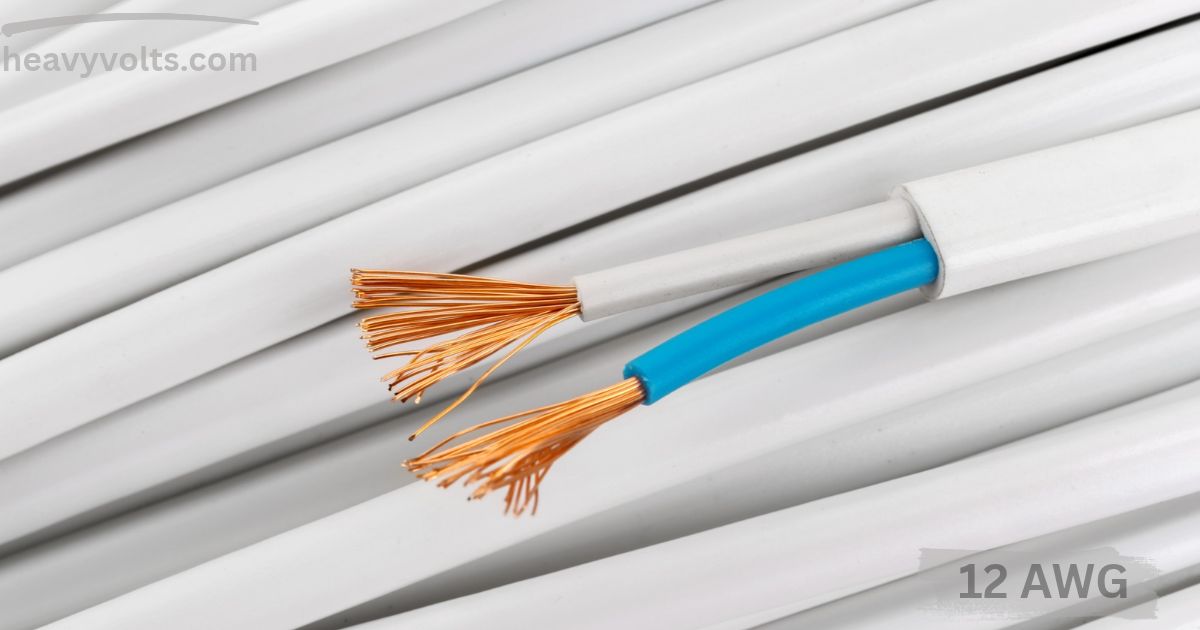
The American Wire Gauge system ranks conductor size by number, and 12 gauge wire sits in the middle of the range. A 12 AWG wire has a wire diameter of 0.0808 inches, which equals a 2.05 mm diameter. Buyers use “12 gauge” and “12 AWG” for the same product.
Wire gauge measurements run backward, so a smaller number means a thicker conductor that carries more current. A single conductor of this size has a copper cross-section near 3.31 mm². The conductor material also matters, because copper carries current better than aluminum at equal size.
How does 12 AWG hook-up wire differ from building wire?
12 AWG hook-up wire is a flexible single conductor for wiring inside equipment, panels and vehicles. Building wire runs inside walls and follows different code rules. I read the insulation marking first, because it decides where the wire may run.
A 12 gauge hook up wire spool gives you one continuous run without splices. Makers offer 12 AWG stranded wire for flexibility and 12 AWG solid wire for fixed, straight runs. A 19 strand build stays fairly stiff, while a 65 strand build bends easily through vibration and tight corners.
What specifications should I read on the label?
Read the 600 volt rating, the 105°C temperature rating, the insulation thickness and the outside diameter before you buy. These four numbers show whether the wire fits your fittings, your heat load and your voltage. Skipping them leads to cracked jackets and failed inspections.
The bare copper stranding count controls flexibility and fatigue life. Many fine strands share the load and survive repeated movement better than a few thick ones. Ask the seller for the stranding count, because listings often omit it.
Which wire types and standards should I know?
Several type names cover 12 AWG wire, and each signals a different rating and use. MTW wire, short for Machine Tool Wire, serves machine panels, while THHN wire and THHN/THWN-2 serve conduit runs. XHHW-2, THHW and SIS switchboard wire handle more specialised jobs.
Most of these types use PVC insulation, though some use cross-linked compounds. Match the type marking printed on the jacket to the job, and ignore the seller’s shorthand. I learned that after an inspector rejected a reel I bought by gauge alone.
What do UL and CSA numbers mean?
A UL listed wire carries a number that points to a safety standard. UL 1015 covers 600 volt panel wire, while UL 1007 and UL 1061 cover lighter hook-up types. Other labels, including UL 1429, UL3173, AWM (appliance wiring material) and CSA TEW, appear on equipment wire.
Voltage and temperature limits differ between numbers, so read the standard’s text instead of guessing. Reputable sellers print the standard on the product page. Ask for a datasheet when the page stays silent.
What about automotive and high-temperature types?
GPT primary wire and the TXL wire, SXL wire and GXL wire families follow SAE J1128 for road vehicles. PTFE wire handles extreme heat, and MIL-W-16878 covers military hook-up wire. Verify the exact standard before you order, because the family names overlap.
These types survive engine bays and avionics bays that melt ordinary insulation. TXL wire runs thin-walled, GXL wire standard-walled and SXL wire thick-walled. Pick the thinnest wall that meets your voltage and abrasion needs.
How do flame ratings affect my choice?
A VW-1 flame rating and an FT-1 flame test both measure how insulation burns when a flame touches a vertical sample. Inspectors often ask for one of them inside enclosed cabinets. I check for the marking before I order any bundle.
Flame ratings do not replace voltage or temperature ratings. They add one more filter after the type and standard match your job. Request test data when a vendor claims a rating the jacket omits.
How do spools, kits and cut lengths compare?
Wire spools suit long jobs, while hook-up wire kits suit small projects and repairs. Common spool sizes include a 250 ft spool, a 500 ft spool, a 1000 ft spool, a 2500 ft spool and a 5000 ft spool. Remington Industries lists 12 AWG spools from 25 to 5000 feet.
Cut-to-length wire and custom wire lengths work when one run needs a 25 ft length and nothing more. Cut and stripped wire saves bench time, and color sets keep a small build organised. Buy a spool when you expect repeat work, and buy a length when you do not.
Why do wire colors and markings matter?
Red wire and black wire usually carry power, green wire serves grounding and white wire commonly marks a neutral or return. Green with yellow stripe is the familiar ground marking, and black with white stripe often identifies a switched or secondary conductor. Conventions vary by equipment, so confirm them against your drawings.
Color-coded wire lets a technician trace a circuit through a crowded cabinet in seconds. Striped wire adds more combinations when the basic colors run out. I label both ends, because insulation fades and memory fails.
Where do people use 12 AWG wire?
Automotive wiring and automotive primary wire carry lighting, pump and accessory loads in cars and trucks. Marine wire and marine grade wire use tinned copper, which resists corrosion in salt air. Trailer wiring and appliance wiring also lean on this size.
Equipment builders run control panel wiring inside control cabinets. The size balances current capacity against bend radius. It fits standard ring terminals and crimp barrels sized for it.
What industrial jobs use this wire?
Machine tool applications, material handling equipment, conveyors, cranes and hoists and robotics all use 12 AWG for motor and control leads. Industrial automation and motor control cabinets use it too. Power companies run substation control cable and other utility applications with the same size.
Those jobs expose wire to vibration, heat and oil, so insulation choice matters most. Choose stranded conductors where machines move and solid ones where nothing does. Check the limits for dry locations and for wet locations and oil or coolant exposure printed on the jacket.
What about homes and energy projects?
Electrical outlets and 20 amp circuits in homes use 12 AWG copper under US electrical code. Building wire for those runs differs from hook-up wire, so confirm the listing. Homeowners tackling electrical projects should hire a licensed electrician for panel work.
Solar PV wire and electric vehicle wiring can also use 12 AWG for low-current branches and accessory circuits. Both need insulation listed for sunlight, moisture or heavy cycling. Confirm that listing before buying, because ordinary hook-up wire fails outdoors.
What related wire and cable products sit beside 12 AWG?
Buyers who search for 12 AWG often also need control cable, including 20/10 control cable, plus tray cable, portable power cable and SOOW cord. Battery cable, welding cable, armored cable and MC cable cover heavy-duty power needs. Instrumentation cable, thermocouple wire and VFD cable serve sensing and drive systems.
Magnet wire, bare copper wire, tinned copper wire and single conductor wire cover winding and bonding jobs. Medium voltage cable, coaxial cable, jumper wire and high temperature wire round out the catalog. A good distributor stocks several of these, so one order covers the whole panel.
Which accessories finish a 12 AWG installation?
Wire connectors, wire terminals, cable lugs and splices join conductors, and heat shrink tubing seals them. Cable tubing and sleeving, electrical tape and wire labels protect and identify each run.
Circuit breakers protect the finished circuit, and cable management keeps it tidy for the next technician. Crimping tools and wire stripping tools decide whether each termination holds. I buy a ratcheting crimper before I buy the wire, because bad crimps cause more failures than bad conductors.
What should I look for in a service provider?
Look for a wire and cable distributor that stocks your size, answers questions and states its services on its own pages. In-stock wire and cable and sound inventory management keep your project moving. Same-day shipping helps when a machine stands idle.
Then ask about value-added services and custom wire services. Useful options include wire processing, wire stripping, wire twisting, wire repackaging, wire printing and wire dyeing. Some suppliers also offer coil winding and wire procurement for hard-to-find items.
Which Texas brands and distributors publish these services?
Texas buyers can start with a wire supplier in Texas or a Texas wire and cable distributor. USA Wire & Cable works from Austin, which makes it a fit for Austin Texas wire and cable searches. Each brand below offers the services listed on its own website, so confirm details there.
Remington Industries states cutting wire to custom lengths, repackaging, stripping, twisting, wire processing, procurement and coil winding. Its site also lists bifilar and trifilar windings, 3D-printed bobbins and spools, and cut-and-stripped jumper wire. It serves the USA and worldwide, and it accepts quote requests and credit terms.
Wire and Cable Your Way lists cut-to-length wire, fast delivery, same-day shipping, quote requests, special-order RFQs, a credit application and a product glossary. Its page also carries a 12 AWG Type MTW wire in a 65-strand build on 250, 500, 1000 or 2500 foot spools. Check the site for current stock.
USA Wire & Cable offers a cable management service, a quote request form and downloadable catalog and brochure PDFs. Its site also shows a 20/10 control cable in 12 AWG. IEWC’s site describes wire management services such as striping, dyeing, twisting and printing, plus its own automated re-spooling machines and a WireFinder Pro search tool, though I read those details from search snippets because the page blocked me.
Manufacturer names such as Belden, Southwire, Alpha Wire, Okonite, Lapp, Panduit and Prysmian appear across these sites. Accent Wire Tie, a Texas company in Tomball, sells baling wire for construction and recycling, which differs from electrical 12 gauge wire. I found no stated repair or service details for it, so keep the two products apart when you search.
Is it worth using my website to find a provider?
Yes, because it gathers the buying checklist, the brand names and the service lists in one place instead of five. You read the specifications here, then visit each brand’s own website to confirm current services. That saves time and keeps you from buying the wrong wire.
This site lists only the services that each brand’s website states, and it labels anything unconfirmed. You decide which brand fits your project, quantity and deadline. We simply shorten the search.
What are the most common questions about 12 AWG wire?
Is 12 gauge wire the same as 12 AWG wire?
Yes, both names describe one conductor size. The American Wire Gauge standard sets it at 0.0808 inches. Check the insulation type to learn how you may use it.
Can 12 AWG copper wire handle 20 amps?
In most building wire circuits, US code pairs 12 AWG copper with a 20 amp breaker. Heat, bundling and insulation type can lower that limit. Check the code tables for your exact case.
Should I buy a spool or a kit?
Buy a spool when you expect repeat work or several runs. Buy a kit or a cut length when one job needs a small amount. Compare both options against your color and length needs.
How do I verify what a brand offers?
Open the brand’s website and read its services and product pages. Send a quote request when a detail is missing. Trust written answers over assumptions.
Where Can You Buy 12-Gauge (12 AWG) Hook-Up Wire Spools and Kits in Texas?
Visit my website to compare 12 Gauge Wire, spool and kit options, Texas distributors and the services each brand states on its own site. You will leave knowing which specifications to read and which questions to ask a provider. Start there, then confirm every detail with the brand you choose.