
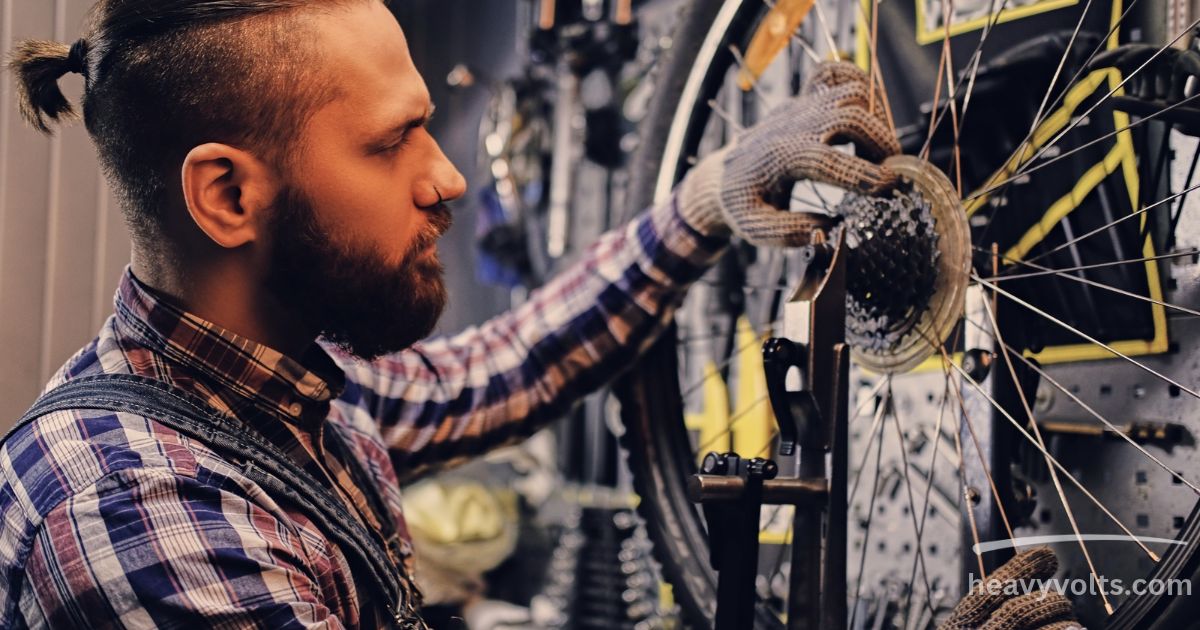
Finding reliable electric bike repair in New Braunfels requires understanding how electric drivetrains differ from standard bicycles and knowing which local or mobile shops handle your specific brand. Riding across Comal County’s hills and river trails puts extra stress on motors, batteries, and brakes.
You can compare verified shops and mobile mechanics directly on our site to book the right e-bike service near me without guesswork.
What Makes E-Bike Repair Different From Standard Bike Service?
An electric bicycle combines heavy mechanical hardware with high-voltage electronics, so a certified technician must inspect both systems during every visit. Standard bike shops often handle mechanical frames, while specialized e-bike technicians run system diagnostics on sensors, wiring, and power delivery. Understanding both halves prevents minor wear from turning into expensive component failures.
In my experience wrenching on commuter and trail builds, the extra weight and speed of a commuter e-bike or cargo e-bike accelerate wear on parts that rarely fail on analog bikes. A hub motor or mid-drive motor multiplies torque through your drivetrain, while regenerative or high-speed stops test your stopping power on every descent. Mechanics also isolate electrical faults before touching mechanical fasteners so they never damage sensitive circuits.
How Do E-Bike Motors, Controllers, and Sensors Work Together
Your e-bike motor relies on a network of electronic inputs to deliver smooth power whenever you pedal or twist the grip. The controller acts as the central brain, reading signals from your pedal-assist sensor, cadence sensor, or torque sensor before drawing energy from the electric bike battery. If a single magnet ring shifts or a motor inhibitor switch sticks, power delivery stops immediately.
Riders often confuse mechanical drag with electrical failure when intermittent motor assistance interrupts a ride. A hub-drive motor sits inside the rear or front wheel hub, whereas a mid-drive motor drives the crankset directly through the bottom bracket. Meanwhile, the throttle, display, and control panel communicate through insulated wiring harnesses that require careful routing along the frame and fork.
What Are the Most Common E-Bike Problems Riders Face?
Most e-bike breakdowns fall into predictable electrical or mechanical patterns that show clear warning signs before leaving you stranded. Power failures usually trace back to loose connectors, degraded cells, or tripped protection circuits, while noises signal worn mechanical parts. Catching these symptoms early saves you from towing a heavy bike home.
When an electric bike won’t turn on, I always check the charging port, fuse, and circuit breaker before assuming the worst. Sometimes a rider notices sudden power loss or reduced battery range after leaving their pack in a hot Texas garage, which accelerates lithium-ion battery aging. Other times, the motor cuts in and out while riding over bumps, or the screen flashes display errors, fault codes, and error signals that point straight to a loose plug.
Why Do Brakes, Tires, and Chains Wear Out Faster on E-Bikes?
Higher cruising speeds and heavier frames generate extra friction and heat across every moving mechanical component on your bicycle. Your brake pads, brake discs, and rotors absorb far more kinetic energy during every stop, which accelerates brake pad wear. Simultaneously, continuous motor torque stretches chains and flattens rear tires faster than human pedaling alone.
Ignoring clicking and grinding noises, motor whining, or rattles and squeaks quickly ruins expensive gears and braking surfaces. Worn pads scrape metal against rotors, while misaligned brake calipers and stretched brake cables lengthen your stopping distance on busy New Braunfels roads. Furthermore, a flat tire or low tire pressure increases rolling resistance, drains your battery, and strains wheel rims and spokes under heavy loads.
Which Brands and Shops Offer E-Bike Repair and Maintenance?
Several established shops and service providers outline clear e-bike maintenance and repair capabilities on their official websites, giving New Braunfels riders multiple paths for support. Each brand offers the exact services listed on its own website, ranging from local brick-and-mortar shop work to mobile van repairs. Checking each provider’s confirmed menu ensures you match your bike’s issue to the right technician.
Local riders in New Braunfels can visit Electric Evolution on South Seguin Avenue, which states on its website that it provides e-bike assembly, ongoing maintenance and repair on any brand of e-bike or electric motorcycle, and warranty service on scooters purchased from its shop.
Just up I-35 in Kyle, Kyle Cyclery lists battery testing and battery replacement, battery optimization, motor maintenance and repairs including motor calibration, brake and drivetrain tuning, electrical diagnostics, mobile bike repair, accessory installation, and upgrades on its site.
If you prefer nationwide resources or mobile convenience, Velofix lists on-demand assembly, repair, maintenance, Silver and Gold tune packages, flat repair, hourly diagnostic and troubleshooting time, parts sourcing, and brand-approved warranty work on its website while explicitly noting it does not service electric components, batteries, electric motorcycles, or electric scooters.
Additionally, REI details basic tune packages, wheel truing, brake repairs, pad and rotor replacement, chain and belt drive checks, and flat repairs at REI Bike Shops on its website, while Crazy Lenny’s eBikes outlines a service center offering professional tune-up work, battery health check diagnostics, and replacement of throttles, controllers, brakes, fuses, wiring, chains, and batteries on its site.
Which E-Bike and Tire Brands Do These Service Providers Mention?
Service providers frequently reference specific bicycle and component manufacturers when detailing parts sourcing and tire replacements on their websites. Knowing which brands appear in shop service guides helps you confirm whether a technician works with your model’s hardware. Always verify parts availability before dropping off a direct-to-consumer bike.
Across their maintenance guides and service menus, Velofix and Crazy Lenny’s eBikes specifically mention Rad Power, Yamaha, OHM, Benno, and Stromer when discussing e-bike service and parts sourcing. Meanwhile, REI’s electric bike maintenance guide explicitly highlights Continental, Michelin, and Schwalbe and Kenda as trusted manufacturers producing durable replacement tires built for heavier electric bicycles. Matching your ride with factory-approved components protects your warranty and preserves reliable handling.
How Much Does E-Bike Service Cost and How Often Should You Schedule It?
Routine e-bike tune-up cost typically ranges from $75 to $150 for standard mechanical adjustments, while complex electrical diagnostics or motor replacements cost more depending on parts and hourly labor. Most riders should book a seasonal tune-up every six months or every 750 to 1,250 miles. Heavy daily commuters who ride in rain or haul cargo need inspections even more frequently.
Following a structured e-bike maintenance schedule by mileage keeps your warranty intact and prevents sudden mid-ride failures. Every maintenance schedule depends on your riding terrain, cargo weight, and chosen pedal assist level, so check your owner’s manual for factory service intervals. A thorough shop visit includes a safety inspection, a torque settings check across handlebars and pedals, wheel truing, spoke re-tensioning, and a post-service test ride to verify smooth operation.
What Happens During a Professional E-Bike Tune-Up?
A professional tune-up systematically restores braking precision, shifting accuracy, and electrical reliability across the entire bicycle. Technicians clean grime from the frame, inspect every fastener, and test electronic connections before clearing your bike for the road. Every step targets the exact wear points created by electric motor assistance.
During a comprehensive shop appointment, mechanics perform a component wipe down, brake adjustment, and hydraulic brake bleeding to restore firm brake levers and crisp caliper bite. They also complete drivetrain tuning, derailleur adjustment, and gear indexing to eliminate shifting hesitation and chain wear. If you own a belt drive system, the technician inspects belt tension and wear instead of lubricating metal links.
How Can You Maintain Your E-Bike at Home Between Shop Visits?
Consistent weekly maintenance and a quick pre-ride inspection prevent most roadside breakdowns and extend the lifespan of expensive electrical parts. Simple habits like checking air pressure, wiping down connectors, and keeping your chain clean take less than ten minutes in your driveway. Knowing DIY e-bike maintenance vs shop repair boundaries also keeps you safe from high-voltage hazards.
Before every ride, use a pressure gauge to verify your tire PSI and squeeze both brake levers to confirm solid resistance. Follow proven e-bike chain maintenance tips by wiping grit off the links, checking stretch with a chain wear indicator tool to prevent stiff chain links, and applying dry chain lube sparingly. Keep basic Allen keys handy to tighten loose bolts on racks and fenders or other accessories, and use a multimeter only if your manual outlines safe external voltage checks.
How Do You Protect Your E-Bike Battery and Prevent Flats?
Proper lithium-ion battery care tips and smart inflation habits protect the two most vulnerable systems on any electric bicycle. Always use a manufacturer-approved charger and store your pack indoors away from extreme heat or freezing temperatures. Meanwhile, quality rubber and preventive sealants stop thorns and glass from ruining your afternoon ride.
To extend electric bike battery range and prevent e-bike battery degradation, avoid draining the pack to zero and rely on eco mode while maintaining a steady cadence against wind resistance. Practice indoor charging in a cool, dry spot, keep battery terminals clean to stop terminal corrosion, and use partial charge storage around 30 to 60 percent during long breaks.
Never expose damaged battery cells or a failing battery management system to heat, as battery overheating and short circuits can trigger dangerous fire hazards or thermal runaway. For flat prevention, install puncture-resistant tires, add liquid tire sealant inside each inner tube, and master hub motor flat tire removal by disconnecting motor plugs carefully before loosening axle nuts.
Is Professional E-Bike Repair Worth It Over DIY Fixes?
Paying a qualified mechanic for e-bike diagnostic and troubleshooting is worth every penny whenever electrical faults, brake bleeding, or internal motor issues arise. Attempting complex internal repairs without factory diagnostic tools can void your warranty, damage expensive controllers, or create serious electrical safety risks. Leave high-voltage troubleshooting and precision wheel work to trained professionals.
Home mechanics can easily handle flat tire repair, tube patching, and routine chain cleaning and lubrication, yet internal electric bike drivetrain wear requires specialized instruments. If you notice internal motor wear, frayed wiring, or persistent pedal assist not working symptoms, a shop prevents costly trial-and-error part swaps. Understanding hydraulic vs mechanical disc brakes also matters, because hydraulic systems require bleed kits and mineral oil or DOT fluid that DIY riders frequently contaminate.
Frequently Asked Questions About E-Bike Repair in New Braunfels
How Frequently Should You Service Your E-Bike?
Most riders should schedule a professional tune-up every six months or every 750 to 1,250 miles, alongside an e-bike safety check before riding each week. Daily commuters and heavy cargo riders benefit from professional inspections every 300 to 500 miles.
What Should I Do When My E-Bike Displays an Error Code?
Start your e-bike error code troubleshooting by powering the bike off, checking that the battery sits securely in its mount, and inspecting external plugs for dirt or moisture. If the code returns, stop riding and schedule professional electrical diagnostics to inspect the controller and wiring.
Can Any Bike Shop Fix My E-Bike Motor or Battery?
Not every local bicycle shop services electric components, and many restrict repairs to specific drive systems or brands they sell. Confirm whether a shop handles e-bike warranty and parts replacement or offers mobile e-bike repair service before booking an appointment.
Where Can You Find Trusted E-Bike Repair in New Braunfels?
Finding an authorized e-bike service center in New Braunfels becomes effortless when you compare verified shop capabilities, mobile repair coverage, and supported brands in one place. Visit our website today to explore complete service directories, maintenance guides, and direct booking options for E-Bike Repair, Service, and Maintenance in new braunfels.